Perspective
When fans become the brand's creative department
Words by
Wall
December 06, 2026
For brands with a community of any real size, the volume of images made by that community can quickly outrun anything the brand itself is able to produce. Nobody approves them, nobody pays for them, and most of what we now call brand culture lives there.
The creative department isn't in the building
In September 2020, Nathan Apodaca's truck broke down on his way to work in Idaho. He pulled his skateboard out of the back, picked up the bottle of cranberry juice he'd been drinking, put on Fleetwood Mac's Dreams, and rolled down the shoulder of the highway. One take, twenty-two seconds, skating and drinking, saying nothing.
The clip travelled at a speed no budget can buy. A song released in 1977 went back onto the charts. The label in his hand turned up in hundreds of thousands of re-creations, shot by other people, in other countries, in other languages. Ocean Spray did not commission the film, did not approve it, and could not have thought of it. A few days later the company gave him a cranberry-red pickup truck loaded with juice.
This is the ordinary shape of brand culture now. The thing that travels furthest usually starts outside the company, and the brand generally finds out at the same moment as everyone else.
It is no longer a rare event. A campaign launches with approved photography and thirty seconds of film; within two days a great many other versions of it exist that nobody inside the company has seen: recut, rescored, redubbed, redrawn, turned into memes, printed on shirts sold at a market stall. For a brand with a community of any size, the work made outside can outpace the work made inside very quickly, and the version that gets shared most is rarely the original.
It leaves anyone running a brand in an odd position: you have one creative department on the payroll, and another one many times larger that nobody hired, nobody manages, nobody pays, and nobody can fire.
What actually changed
In December 1975, in a small hall in Tokyo, around thirty self-publishing groups set up tables to sell comics they had made themselves. A few hundred people came. Most of what sold that day was derivative work: someone else's characters, someone else's world, placed in situations the original author had never written. Nobody asked permission.
The fair was Comiket. Fifty years later it is still running, a few days at a time, with hundreds of thousands of visitors and tens of thousands of stalls, still mostly selling derivative work. The publishers who own the characters being used largely do not intervene. A meaningful share of the authors and studios with names in the industry today once sat at exactly those tables before anyone published them officially.
What is striking is not how legal any of this is, but that it has been repeated for five decades. An industry looks at the derivative market growing beside it and, most of the time, treats it as a place where people learn the craft and where demand can be read, rather than a leak to be sealed. The non-enforcement is a decision, taken again and again, not an oversight.
Fan production, in other words, is not new. Fanzines date to the 1930s. Bootleg shirts have existed since rock bands started touring. Modified cars, stickers, hand-printed shirts: people have always picked up other people's things and altered them. What is new is three things collapsing at roughly the same time.
The cost of tools. Cutting thirty seconds of film used to require an edit suite and someone who knew how to use it. It now requires a phone and fifteen minutes.
The cost of distribution. A doujinshi printed in 1985 had to wait for the next convention to meet its readers, and the number of readers was the number of tables in the hall. A drawing today completes that journey before dinner, through nobody's gate.
The distance between watching and making. This is the largest shift. Platforms are now built so that the derivative is easier to produce than the original: a sound you can lift, a template, a format that repeats. The unit of content is no longer the work but the mould. The Idaho video spread partly because it was so easy to remake: one road, one bottle, one song anybody could pull in two taps.
The consequence for brands is blunt. You are no longer broadcasting to a seated audience. You are dropping raw material into a workshop with the machines already running.

Comiket has run for fifty years on the principle that nobody asks and, mostly, nobody stops it.
Four degrees of distortion
Collapsing all of this into "user-generated content" is the fastest way to think about it wrongly. Fan production has at least four degrees, ordered by how much they distort the identity.
Amplification. The Idaho video sits here. The label is intact, the product is intact, nothing has been altered; what gets added is attention, and a context no marketing department would have invented. There is no distortion at all, and every brand wants this part.
Reinterpretation. The entire Comiket hall lives at this level, along with fan art, covers, remixes, and stories written onward from someone else's characters. The identity is still recognisable, but it has passed through another pair of hands and carries that person's taste with it. This is where a brand starts seeing versions of itself it did not draw, occasionally drawn better than the official ones.
Physical modification. In 2021 the collective MSCHF took 666 pairs of existing Nike Air Max 97s, altered them, and sold them as Satan Shoes. They were gone in minutes. Nike sued; it ended in a settlement and a recall. On the same level are the thousands of people repainting sneakers in their bedrooms every day, differing only in that none of them move 666 pairs before lunch. Distortion here touches the object itself and produces a new, saleable thing, which is why most real disputes happen at this level.
Appropriation. The mark is detached from the brand entirely and used to say something the brand never said, sometimes the opposite of it. An advertising character becomes a political meme. A logo is redrawn on a picket sign held by the company's own staff. This is the level brands fear most, and the only one no budget can reach.
Cultural value and risk tend to rise together. The first level is safe and says almost nothing about where you stand in culture. The fourth is dangerous, and one of the clearest signs that your mark has become familiar enough for people to use it as a word in their own sentence.
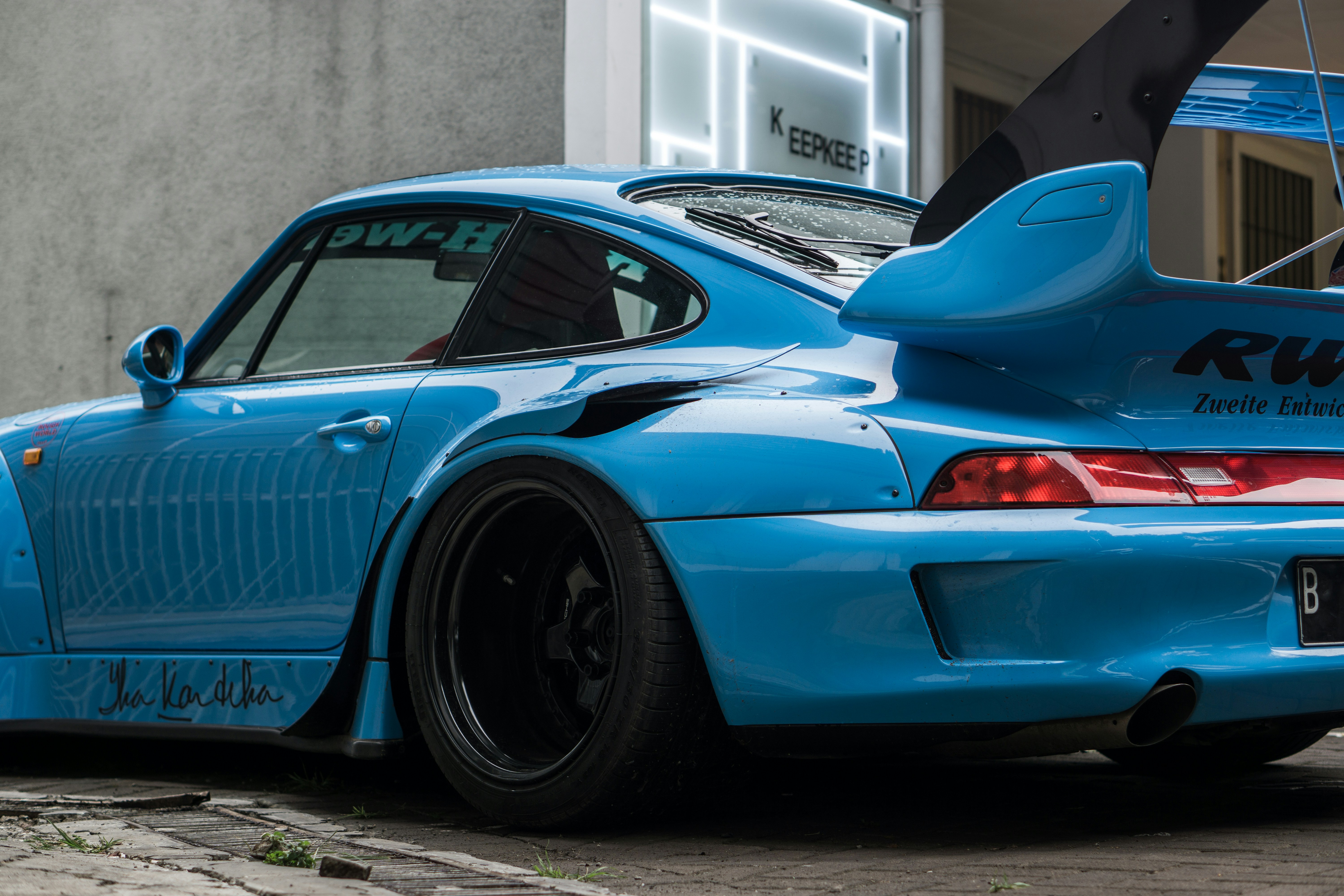
An object can move far from its original form while its underlying identity remains legible.
Why brands still clamp down
It is easy to tell brands to relax. But there are reasons the clamping is rational, and ignoring them makes the advice useless.
Some content genuinely causes harm. A mascot turning up in hate material. Counterfeits made from the wrong materials that put people at risk. Impersonation accounts used to take money. Nobody argues a brand should watch that happen. Beside it sits the plain commercial reason: unofficial goods eat real revenue. And underneath, trademark law has a logic of its own, in which rights attach to use and defence; a name used loosely enough as a common word can lose its protection, as aspirin and escalator did. That is a legal condition worth knowing, not a test for deciding how to respond to your own culture. The two get merged often, and that is usually the moment legal starts writing brand strategy.
The cost of clamping too hard doesn't appear on the legal department's spreadsheet. It appears somewhere else, more slowly and less reversibly.
In 2020 an animated film made by one fan over several years, set in the Warhammer 40,000 universe, spread widely enough that Games Workshop hired its author. A year later the company published guidance stating that fan-made animations were not permitted. The same company, within twelve months, hired one fan animator and told everybody else to stop. The response from the community was fierce, and notably it had little to do with who was legally right; it came from the sense that a door had closed behind exactly the people who had kept that world alive through years when the company published nothing.
The pattern repeats across industries: cease-and-desist letters land on the most devoted fans, the brand wins legally, and loses a layer of culture money cannot buy back. The distinction that actually works isn't "is this allowed", but which kind of act it is: is it competing with you commercially, or is it just talking about you.
And the question rarely asked: who gets paid
Over-enforcement is half the problem. The other half gets discussed less, because it produces no scandal and is usually told as a feel-good story.
Nathan Apodaca got a truck. It was a generous gesture and almost everyone enjoyed reading about it. But it was a gift, not a fee. There was no rate, no contract, no negotiation beforehand. The brand decided, after the fact and once the value was already visible, what the thing had been worth. In every other transaction this industry runs, the order is reversed: you agree terms, then you make the work.
At the scale of one video that is a small and pleasant story. At the scale of a global campaign it changes character. More and more communications plans are now written assuming that much of the content will be made by other people for nothing: briefs inviting creators to post "organically", contests whose prize is exposure, seeding programmes that trade product for content with nothing set down in writing. None of it is fraud. But once a brand starts planning for spontaneity, the thing being planned is no longer spontaneous.
The line is blurry, but one question sharpens it: did the person who made the thing know in advance what they would get. Community culture needs no contract, because nobody is making the work in exchange for anything. A supply chain does. When a brand has already forecast that half of this year's content will come from its community, it has moved to the second category, even if the language describing it still belongs to the first.
Some brands have begun licensing or paying for the content they repost, and some communities have built their own norms about what may be sold and what may not. Most have not. This is probably the sharpest unresolved tension in brand culture right now, and nobody has settled it anywhere.
What to hold, what to let go
This is the real question: how tightly should a strong brand hold on. The workable answer is to stop treating identity as a single block and separate it into layers of different hardness.
The hard core. This list should be surprisingly short. The primary mark in official contexts. Statements with legal or safety consequences. Product quality and provenance. How the brand speaks about serious things. This part is not negotiable, and it is the part worth defending legally.
The soft layer. Colour, mascot, catchphrase, posture, a sound, a repeating composition. This part exists to be picked up. A good system today doesn't only answer "how is this used correctly", it also answers "which parts can survive being used wrongly".
And instead of merely permitting, supply material. Touhou Project is a rare case of this done deliberately: the Japanese author behind the game series publishes guidelines expressly allowing derivative work, and what has grown around it, music, fiction, games written by other people, is many times larger than the original. Lego Ideas is a more structured variant: player-submitted designs are voted on by the community, and a few reach shelves as official products. Both rest on the same observation. Communities don't need a licence, they need something easy to hold. An isolated sound, a frame that takes text well, a shape simple enough that anyone can redraw it. An identity that is easy to remix is not a weak identity. It is one that has already accounted for being taken away.
There is a reasonably clean line to work from. Controlling commercial context is possible and worth doing: going after counterfeits that take money is sound. Controlling meaning is not. Going after a joke neither wins culturally nor conceals the fact that you have misread what is happening.
Commercial context can be controlled. Meaning, so far, has never been.
Better questions
Asking "how much should we allow" assumes permission is still the brand's to give. In most situations the distortion has already happened before anyone could convene a meeting; what remains to decide is the response. Three other questions are worth putting in its place.
Does our identity have anything easy to pick up? If nobody can remix any part of you, that is rarely a sign of discipline. Usually it is a sign that nobody wants to.
When the community gets it wrong, what does the error actually damage? Is anyone harmed, does anyone lose money, is anyone confused at the point of purchase. If the answer is no, the injured party is usually the brand book.
Are we protecting the brand, or protecting control? Those two overlap far less than we assume.

A strong sign can be rewritten again and again without losing what makes it recognizable.
A strong identity is not one nobody can touch. It is one that is still recognisable after a great many people have.
But recognisable is not the same as owned. The exchange is real and it is not even: the brand gains a place in other people's lives, and in return it stops being the only party deciding what it means there. Most brands want the first half without paying the second. The two arrive together. The bottle of juice in Idaho means what it means precisely because nobody at Ocean Spray arranged it, and for the same reason nobody at Ocean Spray can do it again.
So the closing question is probably not how much to let go. It is how much a brand can bear no longer being the only author of its own meaning. The answer differs for every brand, and most only find out once it has already happened.
Resources
Nathan Apodaca (Doggface208) and Ocean Spray's response, 2020
Comiket and the Japanese publishing industry's treatment of doujinshi, from 1975
Henry Jenkins, Textual Poachers, 1992, and Convergence Culture, 2006
Douglas B. Holt, How Brands Become Icons, 2004